“Coffee growing process” search results (7000)

Rwandan coffee growing methods
Rwanda's economy is primarily agricultural. 92 per cent of the population is engaged in farming. Cash crops mainly coffee, tea, cotton. Rwanda is still a backward country because it is an agricultural country and the genocide in 1994 caused the loss of many young workers. It was a huge blow to this already poor country. Lu after the Civil War
2016-06-01 Rwanda coffee origin cultivation way economy to agriculture for
Panamanian Coffee processing method Honey treatment and traditional washing
Panamanian coffee originated in 1780, when European immigrants introduced the first Tipica tree species. Located in Central America, with the natural advantages of sunshine, land and mountains, coupled with a sufficient working population, the region is an excellent area for growing and producing high-quality boutique coffee, and it is a paradise for coffee. In particular, the Geisha coffee from Panama has led to the global customs.
2016-05-16 Boutique coffee Panama treatment way method tradition washing
Coffee businesses in Zimbabwe grow individual coffee
Commercial coffee cultivation in Zimbabwe began in the 1960s. The coffee produced here, like many East African coffee, has a good balance, complex variability, as well as good bean shape and processing technology. Zimbabwe AA-Dandoni Village producing country: Zimbabwe Grade: AA planting area: Qipinggai Factory label: Dandoni Farm treatment method: wet processing outside
2016-06-12 Zimbabwe Coffee Commercial planting individual products
Introduction to Ethiopian Coffee from the producing area of Fine Coffee
Ethiopia is one of the major producers of Arabica coffee in Africa, producing the best Arabian coffee in the world. It is said that coffee was first discovered by shepherds in Essekafa, and the name of coffee evolved from Kafa, so Essex is still the hometown of coffee. The geographical environment of coffee production and processing is very suitable for coffee growth. Coffee is mainly cultivated.
2015-04-14 Boutique coffee origin Ethiopia introduction
In the process of coffee cultivation, coffee is grown with seeds with endocarp.
In the process of coffee cultivation, some people mistakenly think that coffee is grown directly with raw beans, but it takes a long time to grow but find that it does not sprout. In fact, coffee is grown with seeds with endocarp (Parchment). The inner fruit (or sheepskin or paper parchment) refers to the tea-brown hard skin that wraps the coffee seeds, and the coffee beans attached to that layer are called Parchment Bean. Dial
2015-11-06 Coffee cultivation process with inner fruit skin seed planting coffee
The growth habit of coffee the process of the growth of coffee trees.
Coffee trees belong to the evergreen family of Akanaceae. They are tropical plants and are not cold-tolerant. Most of them are planted in areas with elevations of 300,400m, and also in highlands with elevations of 2000-2500 meters. But those who plant on slopes above 1500 meters above sea level have better quality. Coffee trees are most suitable for growing at an average temperature of about 20 degrees Celsius and an annual precipitation of 1500-2000 mm.
2015-02-25 Coffee growth habit tree long process coffee belongs to aka that family
Nicaraguan coffee plantation, Nicaraguan coffee growing environment, Nicaraguan coffee.
Nicaragua, located in the middle of Central America, is the largest country in China and the United States, bordering Honduras in the north, Costa Rica in the south, the Caribbean Sea in the east and the Pacific Ocean in the west. The eastern part is the coastal plain, the high temperature and rainy climate belongs to the tropical maritime climate, and the western part is the coastal lowland with more active volcanoes. The north-central part is a highland, with an average annual temperature of 18 ℃ and an annual precipitation of 1500-2500mm.
2016-03-01 Nicaragua Coffee planting Manor growth Environment located in Central America
Introduction to fine coffee with crisp acidity and special taste of Rwandan coffee
There are about 33000 hectares of coffee plantations in Rwanda, with 500000 people engaged in the coffee industry. With the good natural conditions of high altitude and fertile volcanic soil, the country's fertile soil and suitable climate contribute to plant growth, and coffee trees seem to be driven or forced to grow upward, or because they grow too fast to produce the best coffee beans. Luwang, the beautiful land of a thousand hills
2016-08-30 Acidity freshness special taste Rwanda coffee flavor boutique introduction
Boutique coffee Costa Rican coffee processing method coffee bean method
The particles are full, the acidity is ideal and the aroma is unique and strong. Tarrazu in Costa Rica is one of the major coffee producing areas in the world. The coffee produced is light and pure in flavor and pleasant in aroma. Costa Rica, with its fertile volcanic soil and good drainage, is the first country in Central America to grow coffee and bananas for commercial value. Coffee and bananas are the main food in the country.
2016-05-11 Boutique coffee Costa Rica processing methods coffee beans practices granules fullness
High-quality coffee Costa Rica coffee bean processing method
The particles are full, the acidity is ideal and the aroma is unique and strong. Tarrazu in Costa Rica is one of the major coffee producing areas in the world. The coffee produced is light and pure in flavor and pleasant in aroma. Costa Rica, with its fertile volcanic soil and good drainage, is the first country in Central America to grow coffee and bananas for commercial value. Coffee and bananas are the main food in the country.
2016-05-10 Boutique coffee Costa Rica coffee beans processing methods granules fullness acidity
Bolivian coffee producer Yongas, northeast of La Paz, has a unique coffee growing environment.
We know that Arabica coffee cannot be grown in cold places above 2000 meters above sea level. if the altitude is too high, coffee trees will frost because the temperature is too low. So Bolivian coffee is mainly grown in the Yungas region northeast of La Paz. It borders the Amazon basin and is about 1500-2500 meters above sea level with an average annual temperature of about 10-15 ℃. Therefore, guarantee
2016-06-18 Owned thick coffee planting environment Bolivia producing country La Paz northeast
Bolivian coffee with rich acidity Growing environment Flavor Taste Manor Introduction
One third of Bolivia's territory is Andean, rugged terrain, mainly road transport, accounting for more than 85 per cent of transport. The main railway and road networks are concentrated in the west, and remote areas rely on air communication. However, road coverage is the lowest in South America. Moreover, there is also the Ronggas Highway, the world's most dangerous road known as the Road of Death. It has no developed economy, it's the poorest in South America.
2016-08-17 sour rich bolivian coffee cultivation environment flavor taste manor medium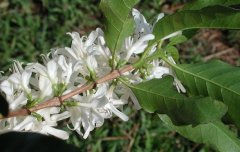
High-definition pictures of coffee flowers appreciate the process of growing boutique coffee beans
Go to the coffee taste network to exchange beautiful coffee flowers: every early spring, milky flowers are covered with branches, set off by the vertical green leaves, more delicate and beautiful. Coffee flowers exude a strong aroma, do not have some amorous feelings, but the flowering period is very short. Several to dozens of flowers are clustered in the axils of leaves, and the second to fifth flowers are planted on a flower axis. The flowers are white and fragrant. The petals of medium and small seed species are generally 5.
2015-10-14 Coffee HD picture appreciation boutique coffee beans planting process
Tell me about boutique coffee
This book mainly introduces two kinds of top coffee in the world, GOURMET and Lanshan No. 1, and other boutique coffees from other places. The origin and present situation of the top boutique coffee, and the judgment standard of the fine coffee. The characteristics of top coffee: boutique coffee beans, boutique production process. The editor's overview of top boutique coffee mainly introduces two kinds of world's top coffee, GOURMET and Lanshan No. 1, and other boutique products.
2014-06-27 Boutique coffee fine coffee beans single coffee
The process of the growth of coffee trees the process of roasting the fruits of coffee trees
The coffee tree is an evergreen tree with small white flowers and green flowers that turn red when it is mature. A normal coffee tree can usually grow to 5 to 10 meters high, but for the convenience of harvesting, bean farmers often prune it to less than 2 meters. After flowering, there are many dark green ellipses, and the mature ones change from dark green to bright red.
2015-11-05 Coffee tree growing process fruit roasting
Analysis of the process from coffee tree planting to coffee bean harvest
Coffee trees take 3-5 years from planting to fruiting. 6-10 years of coffee trees are the most likely to bear fruit, about 15-20 years, is the harvest period. Coffee trees are usually bred in nurseries and grow into saplings, and then moved to coffee farms a year later, in full compliance with the way the Arabs planted and cultivated coffee trees. Coffee trees will continue to take root downward and upward in the first four or five years of their growth.
2015-05-14 Coffee planting coffee beans harvest process analysis coffee results 3-
Introduction of coffee culture and growing environment in Tanzania!
Coffee beans in Tanzania are of extraordinary quality. They are produced in the Mohi district near Mount Kilimanjaro. The mountains with a height of 3,000 to 6,000 feet are the most suitable areas for growing coffee. The fertile volcanic ash gives the coffee here a strong texture and soft acidity. It exudes a delicate fragrance and contains aromas of wine and fruit.
2016-02-29 Tanzania coffee culture and growth environment introduction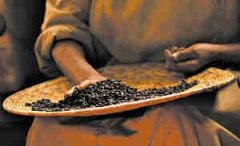
Coffee is made in this way, the production process of coffee beans.
The women picked out the coffee beans that were not fully roasted. The workers poured the coffee beans into the roaster and poured the roasted coffee beans into the plate to cool down. There is a place in Ethiopia called Kafa. Local residents have found that cattle and sheep become excited and powerful after eating a plant that grows small red beans. Later, people began to pick it and grow it consciously, using Kafa as food and drink.
2015-09-21 Coffee like this made coffee beans production process female workers pick out completely bake
The birth of coffee beans (1)
Coffee trees take 3-5 years from planting to fruiting. 6-10 Coffee trees bear fruit most easily in 15-20 years, which is the harvest period. Coffee trees are usually bred in nurseries, grown into saplings, and then moved to coffee plantations a year later, following exactly the same methods used by Arabs to grow coffee trees. For the first four or five years of its life, coffee trees take root downwards and grow upwards.
2014-08-26 Coffee knowledge coffee bean birth coffee encyclopedia
Suriname (Surinam) the first country in South America to grow coffee imported from Norway
High-quality coffee beans are refined by water treatment. The coffee beans with less impurities can be obtained by the water washing method, but if the water quality and time are not properly controlled during the fermentation process, the coffee beans will easily be infected with the sour taste of excessive fermentation. and dry beans also need to pay attention to timely re-inspection to prevent coffee beans from being contaminated by wet ground and sundries. Processed
2016-06-17 Suriname Surinam South America the first cultivation coffee country boutique